Panmnesia Accelerates PCIe-CXL Fusion Switch-Based Appliance Development at OCP Global Summit 2026, Bringing Fully Integrated CXL Server Racks Closer to Data Center Deployment
Share
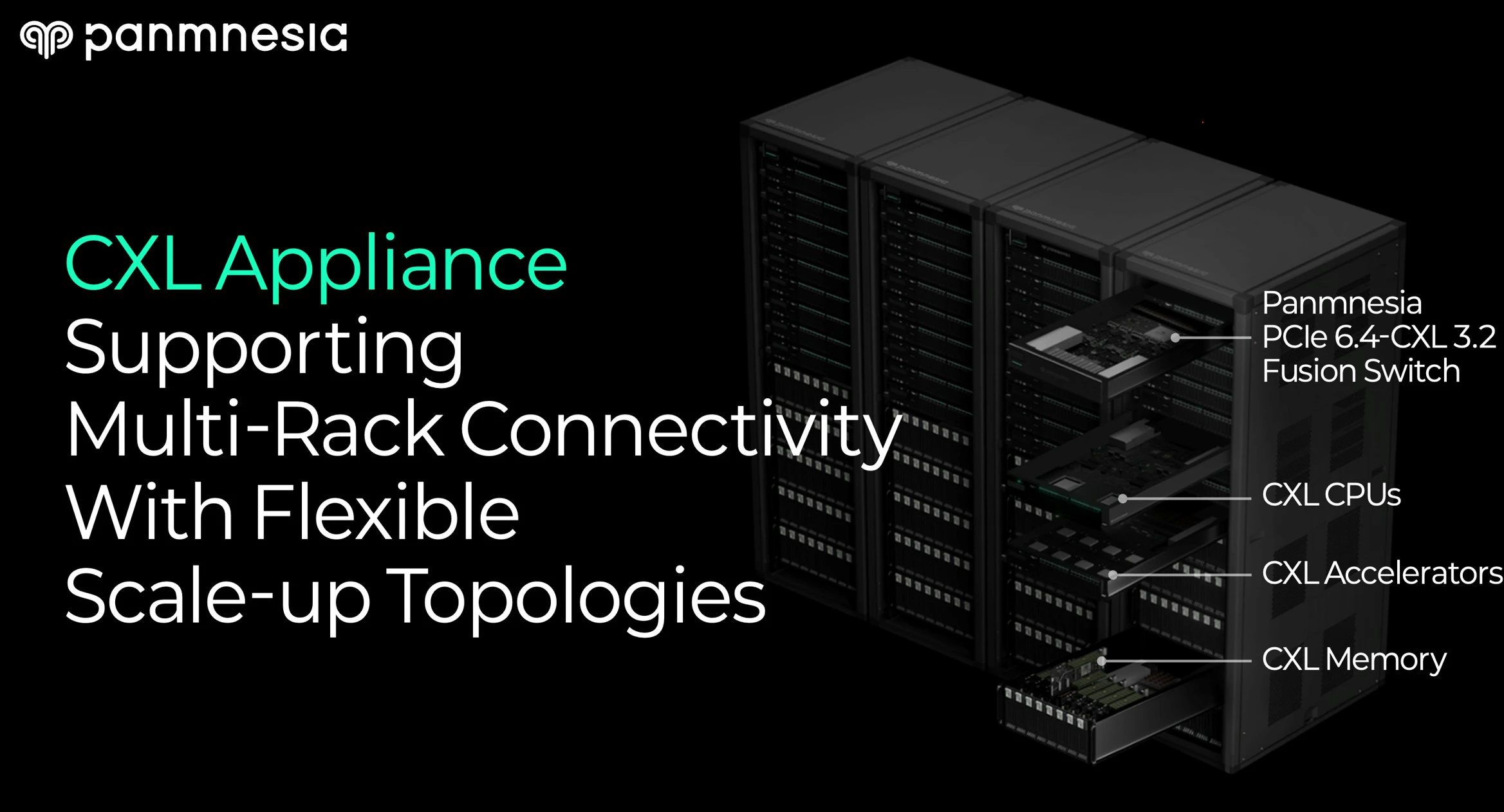
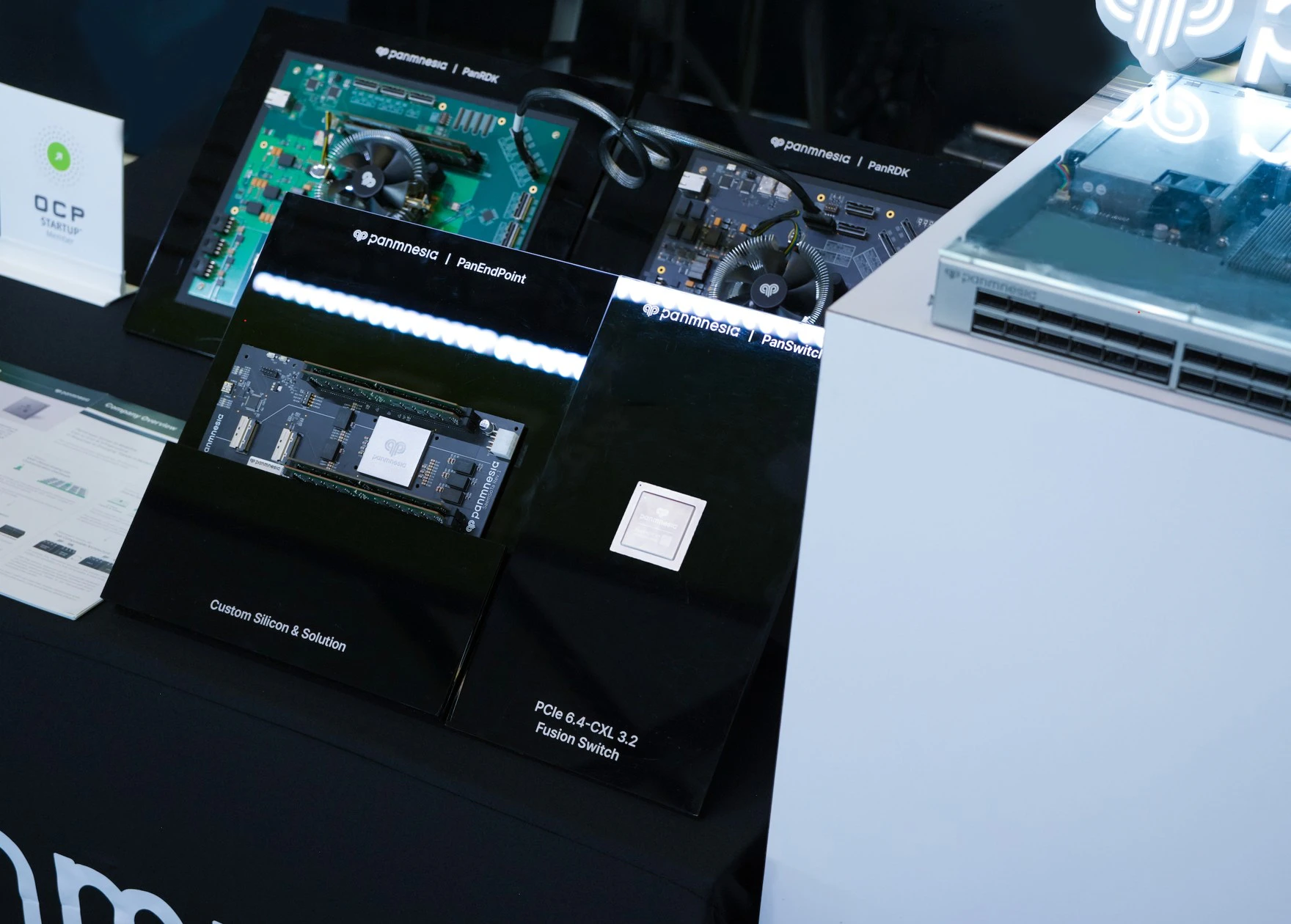
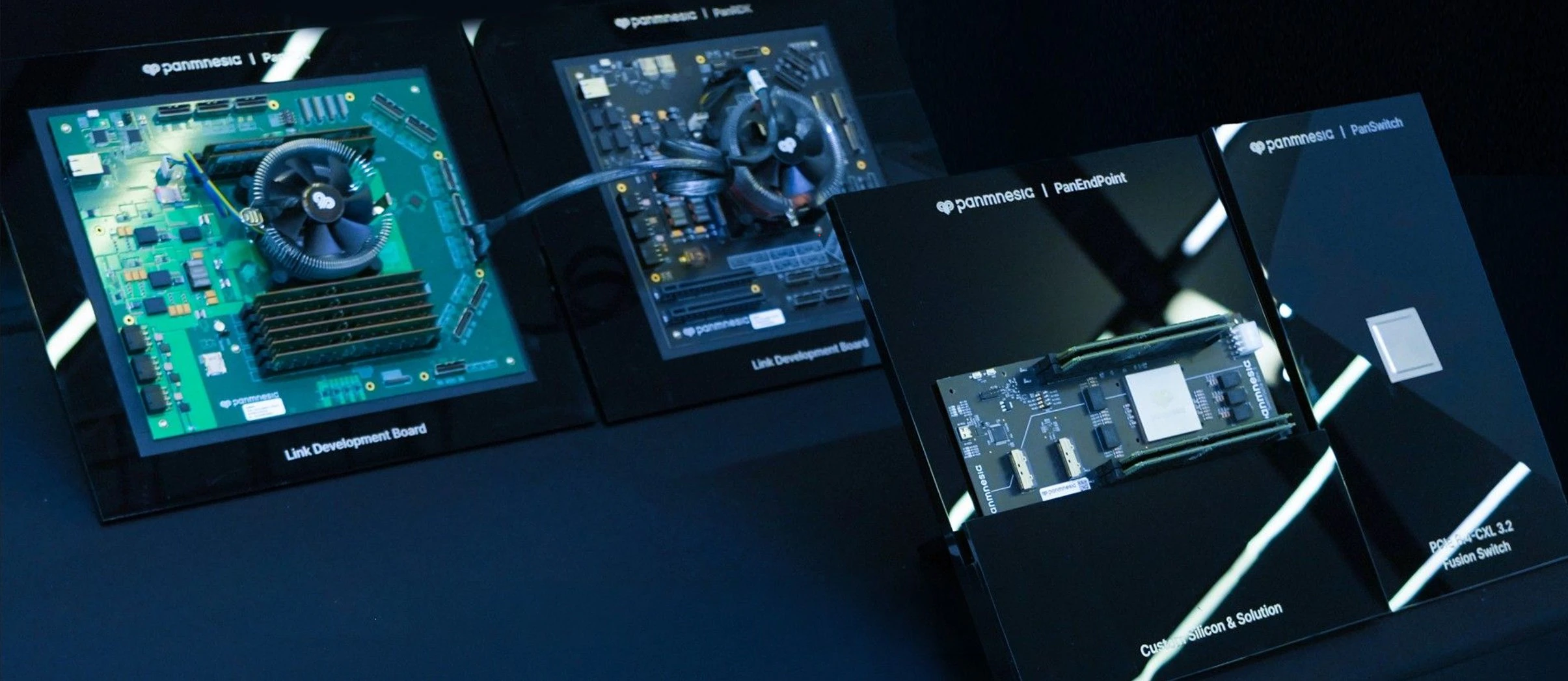
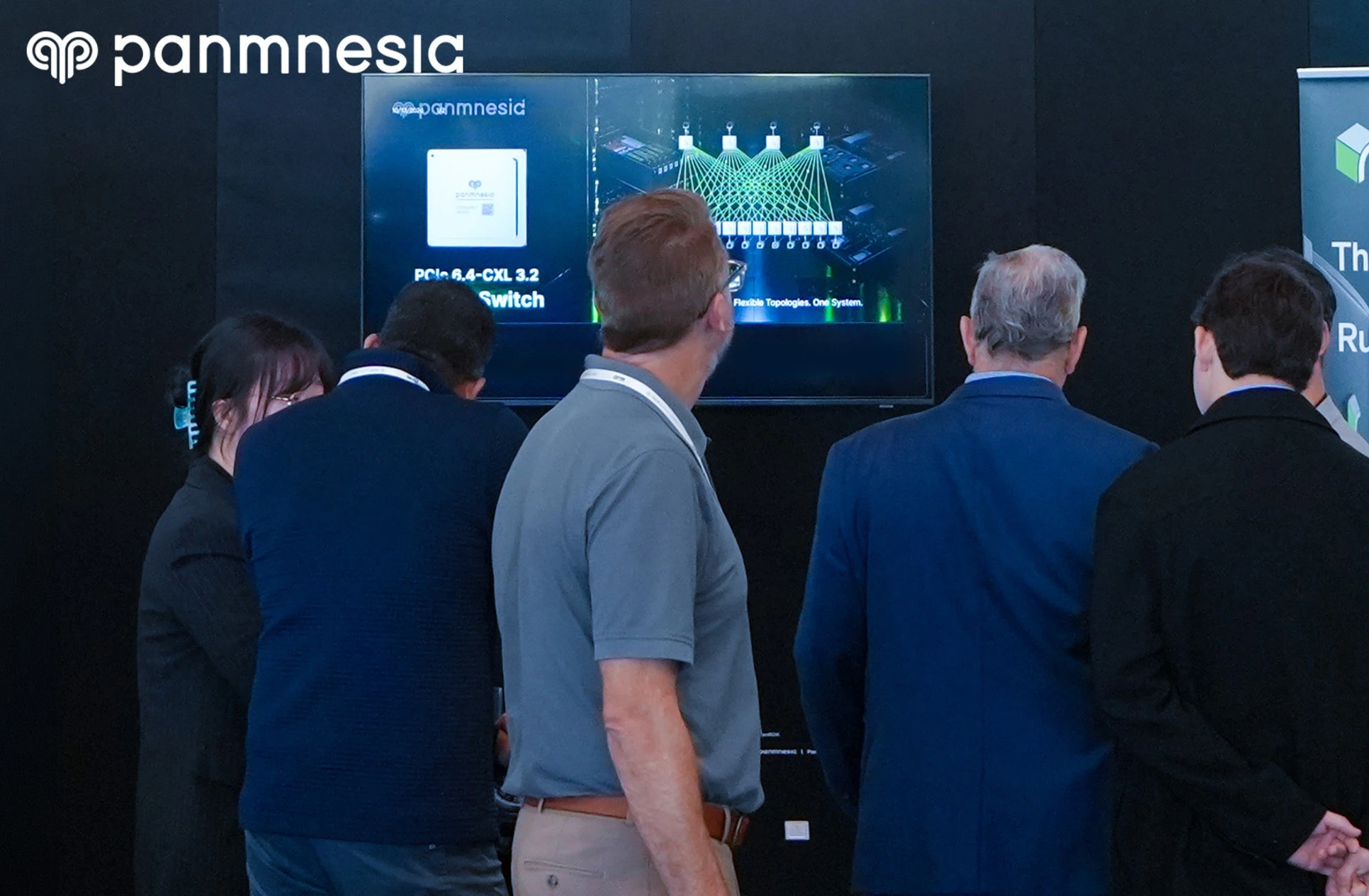
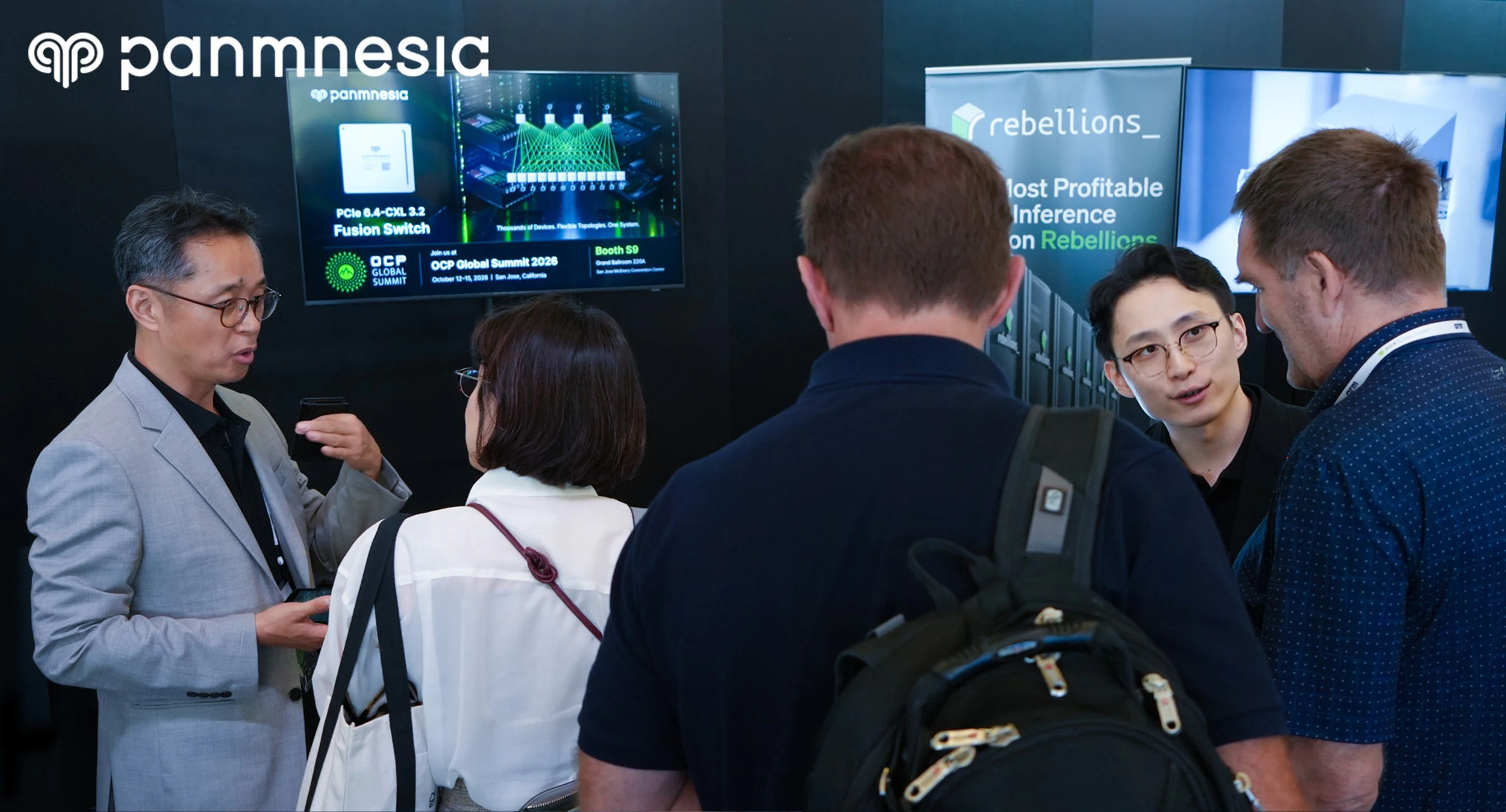
SAN JOSE, Calif., Oct. 14, 2026 — Panmnesia, an AI infrastructure company specializing in link solutions, is showcasing its PCIe 6.4-CXL 3.2 Fusion Switch* at OCP Global Summit 2026[1], one of the world’s largest data center technology events, taking place October 12–15 at the San Jose Convention Center. Using its Fusion Switch silicon, Panmnesia is building CXL appliances with leading system manufacturers. During the show, the company has advanced appliance development through meetings with existing appliance partners, while expanding collaboration to new companies and institutions.
* Switch: A device that acts as a bridge, interconnecting system components such as GPUs and memory.
■ From Compute to Memory: AI Infrastructure’s Center of Gravity Shifts
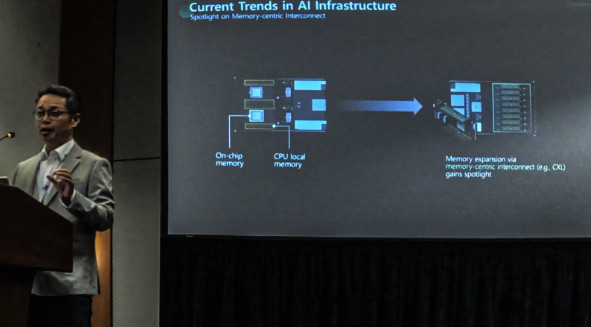
As AI moves beyond answering a single question and evolves into agentic AI—systems that plan on their own, call tools, and carry out multistep tasks—the bottleneck in the data center is shifting from compute to memory. Throughout a task, an agent must retain a kind of working memory, known as the KV cache, that holds prior conversations and task context, and the longer the context it handles, the more memory it needs. Market research firm TrendForce likewise notes that agentic AI is driving a structural expansion in memory demand[2]. The problem is that meeting this demand with GPU-attached high-bandwidth memory (HBM) alone is prohibitively expensive[2].
■ CXL Emerges as a Solution for Memory Expansion
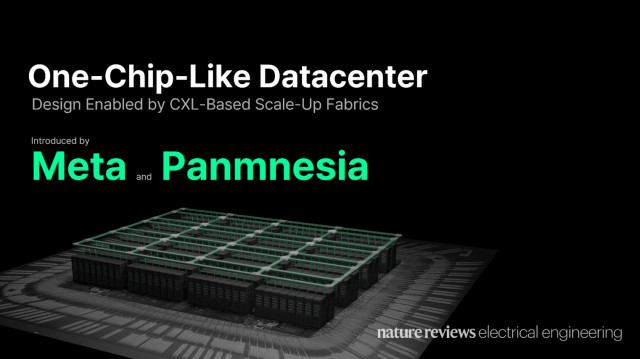
The technology drawing attention as a way to bridge the gap between memory demand and cost is Compute Express Link (CXL), an open industry standard. CXL is a high-speed interface that connects compute devices such as CPUs and GPUs to memory, allowing operators to add memory as needed, or let multiple devices share it, without adding entire servers. Hyperscalers are increasingly disclosing production deployments and trials of CXL-based memory expansion. Results presented at an international conference showed that applying CXL memory to production servers reduced the number of servers required by up to 25% for certain workloads[3][4], and cloud virtual machines with CXL-attached memory have entered private preview[5].
■ Switches: The Key to Large-Scale CXL Expansion
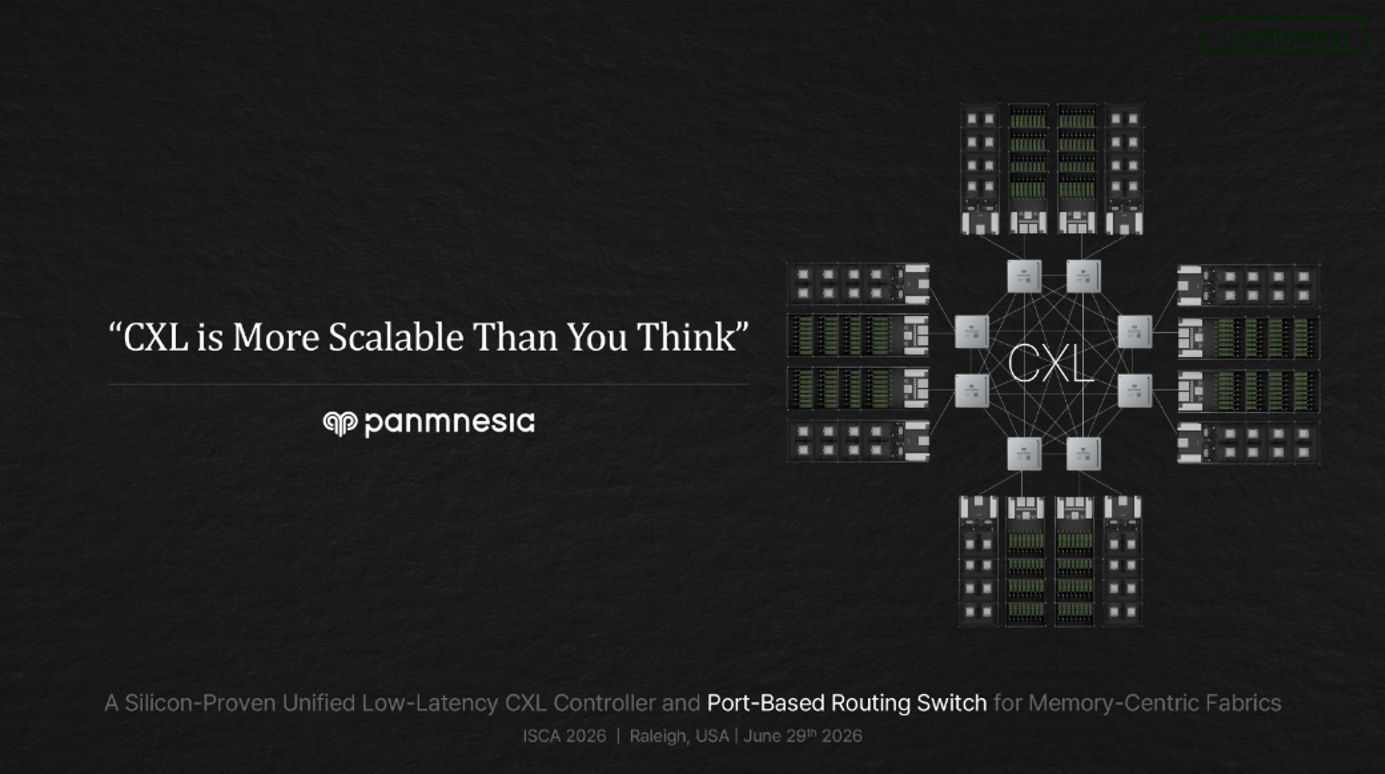
For CXL memory expansion to extend beyond a single server to the rack, and ultimately to the entire data center, one component is essential: the switch. A switch acts as an intersection, routing data among multiple CPUs, accelerators, and memory devices. Connecting devices one by one quickly limits how many can be attached, but with a switch at the center, hundreds or even thousands of devices can be pooled into a single resource and allocated as needed. That is why data center operators and server and system manufacturers preparing large-scale CXL systems are focusing on switches.
■ Panmnesia Fusion Switch: Designed for Large-Scale Connectivity
Panmnesia’s Fusion Switch is a chip optimized for this kind of large-scale connectivity. Its cascading capability, which chains switches together, can unite hundreds or thousands of devices into a single system. Beyond scale, it is currently the only switch in the industry to support Port-Based Routing (PBR) from the CXL 3.2 specification, letting operators freely configure connection topologies to match their data center’s scale and workloads. And by supporting both PCIe and CXL on a single chip, it can connect virtually any device in the data center, including GPUs, CPUs, memory, and accelerators (see the Appendix for details).
■ Building CXL Appliances with Leading System Manufacturers
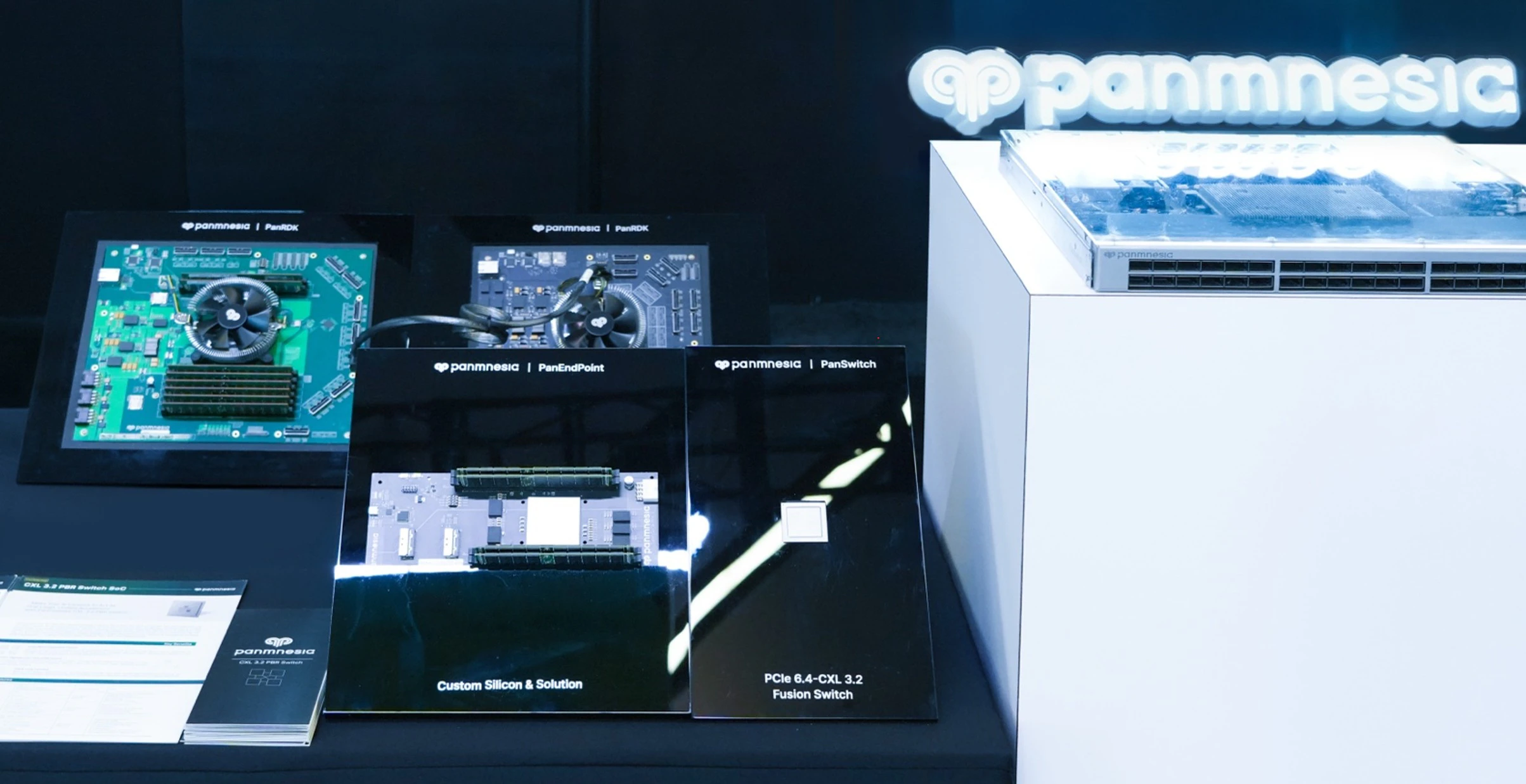
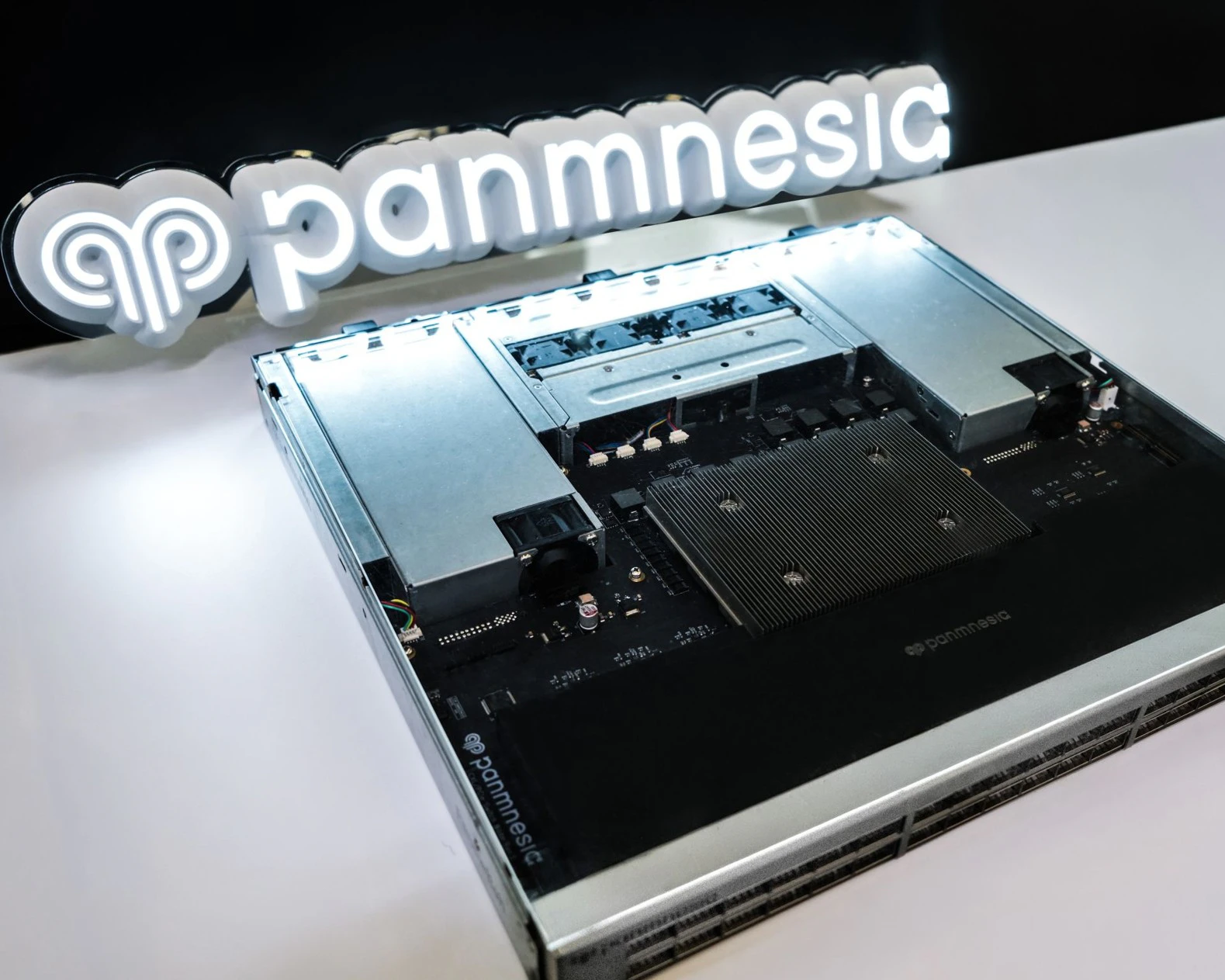
Thanks to these connectivity capabilities, leading system and server manufacturers preparing large-scale CXL systems are turning their attention to Panmnesia’s Fusion Switch. Panmnesia is currently building Fusion Switch-based CXL appliances with these manufacturers. Each appliance is designed as a fully integrated system that connects CPUs, memory, accelerators, and other devices through the Panmnesia Fusion Switch, so it can be deployed in the data center as is. Because no separate interoperability testing or configuration is needed to integrate the devices, customers can adopt rack-scale CXL environments more quickly.
■ Looking Ahead
“Through the appliances we are building with multiple leading system manufacturers, we expect to bring large-scale CXL systems into real-world data centers sooner,” said Myoungsoo Jung, CEO of Panmnesia.
For more information about Panmnesia’s products, appliances, and partnerships, please contact sales@panmnesia.com.
■ About Panmnesia
Panmnesia is an AI infrastructure company developing link solutions that make AI data centers more efficient. To this end, the company has developed semiconductor products including the PCIe 6.4-CXL 3.2 Fusion Switch and the PCIe 7.0-CXL 4.0 combo link controller, and has introduced hybrid link architectures that integrate interconnect technologies such as UALink and NVLink Fusion with semiconductor technologies such as HBM. Building on this technology, Panmnesia raised approximately USD 60 million in a Series A round in 2024 at a valuation of approximately USD 250 million.
For more information, visit Panmnesia’s website at https://panmnesia.com/.
■ Appendix: Key Features of the PCIe 6.4-CXL 3.2 Fusion Switch
1. Thousands of Devices in a Single Fabric
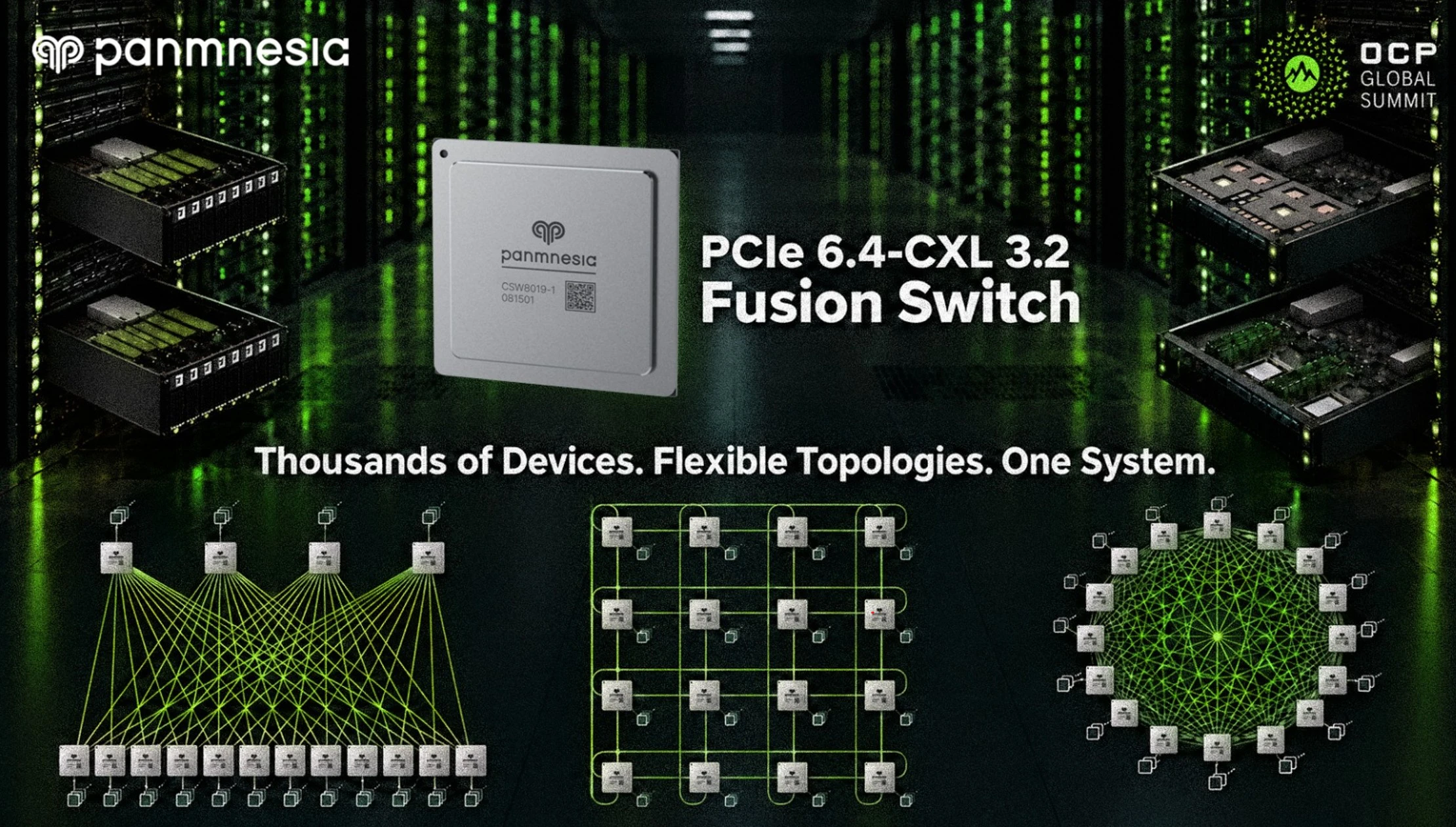
The Fusion Switch supports cascading, which chains multiple switches together. This allows thousands of devices across multiple racks to be unified into a single fabric without going through a network such as Ethernet.
2. Flexible Topologies Beyond the Tree
Hierarchy-Based Routing (HBR), used by conventional PCIe switches and early CXL switches, can connect devices only in a tree structure with the CPU at its root[3]. The Fusion Switch supports HBR as well as Port-Based Routing (PBR), a key feature of the CXL 3.2 specification, allowing devices to be connected in a variety of topologies* suited to a data center’s scale and workload characteristics. It also supports peer-to-peer (P2P) communication, in which devices exchange data directly without going through the CPU, to optimize communication paths. Panmnesia is currently the only company in the industry offering a switch chip that supports Port-Based Routing.
3. PCIe and CXL on a Single Chip
The “Fusion” in the product name reflects its support for both the PCIe and CXL protocols on a single chip. As a result, one chip can connect the full range of devices that make up a data center, from existing PCIe-based GPUs and PCIe switches to CXL CPUs, CXL memory expanders, and CXL-based AI accelerators.
4. Ultra-Low, Double-Digit-Nanosecond Latency
Scaling up connectivity tends to increase latency, but Panmnesia has addressed this with its own technology. Its in-house CXL controller achieves double-digit-nanosecond latency, boosting the responsiveness and throughput of not only the switch but the entire system.
5. Additional Differentiators
The Fusion Switch also guarantees cache coherence based on the CXL protocols (CXL.mem, CXL.cache, and CXL.io) to minimize unnecessary data copies, supports PCIe Gen 6 transfer speeds (64 GT/s), and can be customized for each customer based on Panmnesia’s in-house controllers and IP. Together, these features accelerate device-to-device communication and maximize the cost-performance of AI data centers.
** Port-Based Routing (PBR): A method that forwards signals based on the port assigned to each device, enabling devices to be connected in any desired topology. It offers far greater flexibility in system configuration than Hierarchy-Based Routing (HBR), which supports only tree topologies.
*** Various topologies: Interconnect topologies used in large-scale data centers, such as torus, which densely links devices in a grid or ring pattern, and dragonfly, which organizes devices into groups and connects the groups directly to one another.
■ References
[1] OCP, 2026 OCP Global Summit — https://www.opencompute.org/events/ocp-summit/2026-ocp-global-summit/
[2] TrendForce, Agentic AI Drives Structural Expansion in Memory Demand (May 2026) — https://www.trendforce.com/presscenter/news/20260529-13068.html
[3] Blocks & Files, Panmnesia boosts CXL scale with fabric switching. Meta repurposes old DRAM with CXL (June 2026) — https://www.blocksandfiles.com/architecture/2026/06/26/panmnesia-boosts-cxl-scale-with-fabric-switching-meta-repurposes-old-dram-with-cxl/5263151
[4] Meta, Vistara: Making CXL Real—Full Path from ASIC Design and OS Support to Hyperscale Deployment (ISCA 2026 paper) — https://aisystemcodesign.github.io/papers/isca26/vistara_camera_ready.pdf
[5] Microsoft Tech Community, Azure delivers the first cloud VM with Intel Xeon 6 and CXL memory - now in Private Preview (November 2025) — https://techcommunity.microsoft.com/blog/sapapplications/azure-delivers-the-first-cloud-vm-with-intel-xeon-6-and-cxl-memory---now-in-priv/4470067